
BIAB vs Hard Gel: Which Nail Enhancement Is Right for You?
Quick Answer:
If you’re deciding between BIAB (Builder in a Bottle) and Hard Gel, the best choice depends on your nail goals rather than which product is “better.”
BIAB is ideal for clients who want to strengthen their natural nails while maintaining a lightweight and natural appearance. It offers flexibility, promotes healthier nail growth, and works exceptionally well for short to medium-length nails.
Hard Gel, on the other hand, is designed for maximum strength and durability. It is the preferred choice for sculpted nail extensions, dramatic nail shapes, and clients who frequently place extra stress on their nails.
At V Nails, both systems are available, and our technicians recommend the most suitable option based on your nail condition, daily activities, and desired style.
Walk into any professional nail salon today, and you’ll likely hear clients asking the same question:
“Should I get BIAB or Hard Gel?”
With both services becoming increasingly popular, it’s easy to assume they’re simply different names for the same thing. In reality, they are two distinct nail enhancement systems, each designed for different purposes.
Choosing the wrong product can lead to unnecessary lifting, breakage, discomfort, or disappointment if it doesn’t match your lifestyle. That’s why understanding the differences before booking your appointment is important.
Whether you’re hoping to grow your natural nails, achieve elegant long extensions, or simply enjoy a long-lasting manicure, knowing how BIAB and Hard Gel perform can help you make the right decision.
In this comprehensive guide, we’ll compare everything you need to know, including:
* What BIAB is
* What Hard Gel is
* Durability
* Flexibility
* Nail health
* Maintenance
* Cost considerations
* Which option suits different lifestyles
* Frequently asked questions
By the end of this guide, you’ll have a clear understanding of which nail enhancement is best for your needs.
What Is BIAB (Builder in a Bottle)?
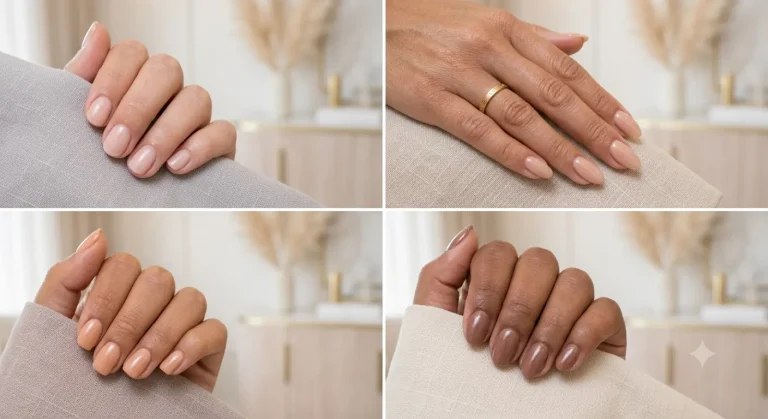
Builder in a Bottle, more commonly known as BIAB, is a specialized builder gel formulated primarily to strengthen natural nails rather than create long extensions.
Unlike traditional gel polish, BIAB has a thicker consistency that adds structural support to the natural nail. Once cured under a UV or LED lamp, it forms a protective layer that helps reduce breakage while allowing the natural nail underneath to continue growing.
One of the biggest reasons BIAB has become so popular is that it combines beauty and nail care into one service. Instead of relying on acrylics or thick enhancements, many clients choose BIAB because it provides a more natural appearance while still delivering impressive durability.
Many people who struggle with peeling, splitting, or brittle nails find that BIAB helps them maintain stronger nails between appointments.
Benefits of BIAB
BIAB offers several advantages for clients seeking healthier-looking nails.
Natural Appearance
One of BIAB’s biggest strengths is its subtle finish. The product levels smoothly across the nail, creating a clean, elegant look without appearing bulky.
This makes it particularly popular among professionals, students, and anyone who prefers understated manicures.
Flexibility
Unlike rigid enhancement systems, BIAB retains a slight amount of flexibility after curing.
That flexibility allows it to absorb minor impacts better than harder systems, reducing the chance of cracks on shorter natural nails.
Supports Nail Growth
Many clients begin using BIAB because they want to grow out damaged or bitten nails.
Since the product acts as a protective shield, it minimizes everyday wear while allowing the natural nail underneath to become stronger over time.
Comfortable to Wear
Because BIAB closely follows the natural movement of the nail plate, many clients describe it as feeling lighter and more comfortable than thicker enhancement systems.
Excellent Base for Gel Polish
BIAB can be worn alone for a clean minimalist manicure or topped with gel polish for endless color options while maintaining additional strength underneath.
If your goal is to strengthen your natural nails without committing to long extensions, our BIAB Nail Services are designed to help you achieve healthy, beautiful nails that last for weeks.
What Is Hard Gel?
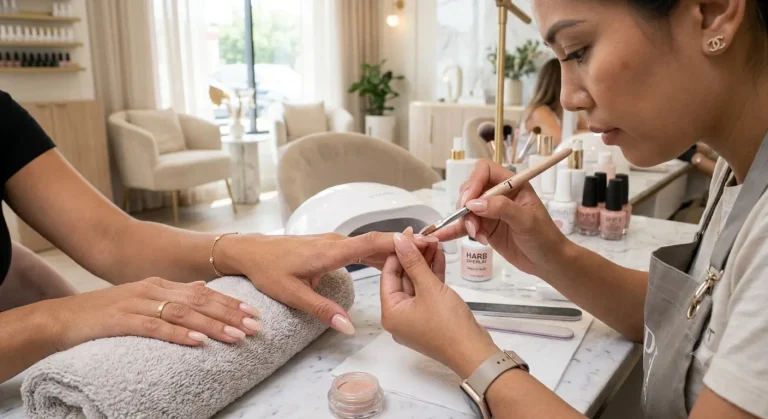
While BIAB is primarily designed to reinforce natural nails, Hard Gel is built with one goal in mind: creating exceptionally strong nail enhancements.
Hard Gel is a thicker, more rigid builder gel that cures under a UV or LED lamp to form a durable enhancement capable of supporting longer nail lengths and more elaborate shapes. Unlike BIAB, Hard Gel is not typically soaked off with acetone. Instead, it must be carefully filed down by a trained nail technician during maintenance or removal.
Because of its strength, Hard Gel has become a favorite among clients who enjoy longer nails, dramatic nail shapes, or intricate nail art that requires a stable foundation.
One of its defining characteristics is its ability to maintain its structure even under greater stress. Whether you’re wearing long almond nails, coffin-shaped extensions, or sharp stilettos, Hard Gel provides the strength needed to keep those enhancements intact.
Benefits of Hard Gel
Exceptional Strength
Hard Gel is engineered to withstand more pressure than flexible overlay systems. This makes it particularly suitable for clients who prefer long extensions or whose nails experience frequent daily use.
Ideal for Nail Extensions
Unlike BIAB, which is generally recommended for overlays and short extensions, Hard Gel can comfortably support significant length without sacrificing stability.
Excellent Shape Retention
Once cured, Hard Gel maintains its structure remarkably well. Sculpted arches, crisp sidewalls, and properly built apexes remain consistent throughout the wear period when maintained correctly.
Perfect for Intricate Nail Art
Because the surface remains firm and stable, Hard Gel serves as an excellent canvas for chrome finishes, encapsulated glitter, hand-painted nail art, rhinestones, and 3D embellishments.
Long-Lasting Wear
With proper application and routine maintenance, Hard Gel enhancements can remain beautiful for several weeks before requiring a fill.
Clients looking for longer enhancements can explore our Gel Nail Extension Services, where our technicians customize each set according to your preferred nail shape, length, and lifestyle.
BIAB vs Hard Gel Comparison at a Glance
Many first-time clients assume BIAB and Hard Gel are competing products that produce identical results. In reality, they’re designed for different purposes.
The easiest way to understand the difference is to compare how each performs in real-world situations.
Feature
BIAB
Hard Gel
Best For
Nail Strengthening
Nail Extensions
Flexibility
High
Low
Strength
Moderate to High
Very High
Long Extensions
Limited
Excellent
Natural Appearance
Excellent
Excellent with Proper Application
Removal
Easier
Requires professional filing
Weight
Lightweight
Slightly Heavier
Nail Growth Support
Excellent
Good
Maintenance
Every 2-4 Weeks
Every 3-4 Weeks
Ideal Client
Natural Nail Lovers
Extension Lovers
Neither system is universally better. Instead, each excels in different situations. Choosing the right enhancement depends on your lifestyle, nail condition, and desired result.
BIAB vs Hard Gel: Durability
When it comes to durability, both systems perform exceptionally well, but they are durable in different ways.
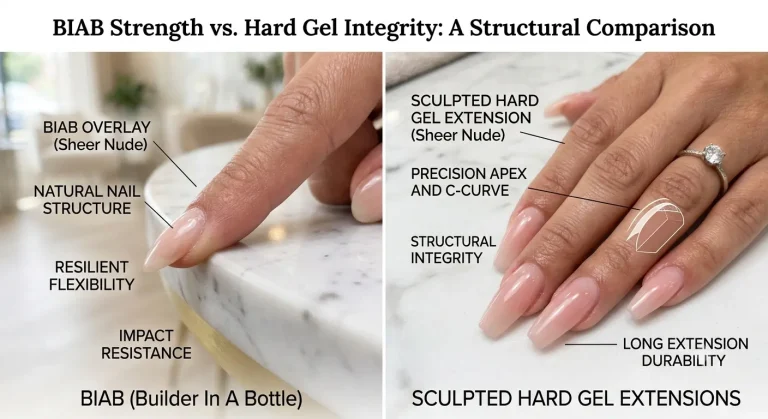
BIAB focuses on protecting and reinforcing natural nails. Its slight flexibility allows it to absorb small bumps and impacts that occur during everyday activities. This flexibility reduces the likelihood of cracking on shorter nails.
Hard Gel approaches durability differently. Rather than flexing with the nail, it creates a rigid protective structure capable of supporting greater length and heavier stress. This rigidity makes it the superior choice for clients who want long extensions.
If your goal is simply to maintain healthy natural nails, BIAB provides more than enough durability for everyday wear.
If your goal is dramatic length and maximum structural support, Hard Gel offers superior performance.
BIAB vs Hard Gel: Flexibility
One of the biggest differences between these systems is flexibility.
BIAB retains a slight amount of movement after curing. This flexibility allows the enhancement to work with the natural nail instead of resisting every small movement.
For clients who type all day, use their hands frequently, or prefer shorter natural nails, this flexibility often results in greater comfort.
Hard Gel is intentionally much more rigid.
Its purpose is to maintain the shape of sculpted extensions while resisting bending. This rigidity prevents long enhancements from collapsing under pressure but also means the product is less forgiving when subjected to sudden impacts.
Neither characteristic is inherently better.
Instead, flexibility should match your nail goals.
Choose BIAB if comfort and natural movement are priorities.
Choose Hard Gel if maintaining long sculpted extensions is your primary objective.
BIAB vs Hard Gel: Which Is Stronger?
This is one of the most frequently asked questions in professional nail salons.
The answer depends on what you mean by “strong.”
If strength means supporting long nail extensions without bending, Hard Gel is the clear winner.
Its rigid structure makes it capable of holding dramatic lengths while maintaining proper nail architecture.
However, if strength means protecting the natural nail while remaining comfortable and reducing breakage, BIAB often provides the better solution.
Because BIAB flexes slightly with the natural nail, many clients experience fewer cracks on shorter overlays compared to rigid systems.
This is why professional nail technicians recommend different products for different situations instead of applying the same enhancement to every client.
Not sure which enhancement is best for your nails? Schedule a consultation with V Nails and let our experienced technicians recommend the most suitable service based on your nail health, lifestyle, and beauty goals.
BIAB vs Hard Gel: Maintenance Requirements
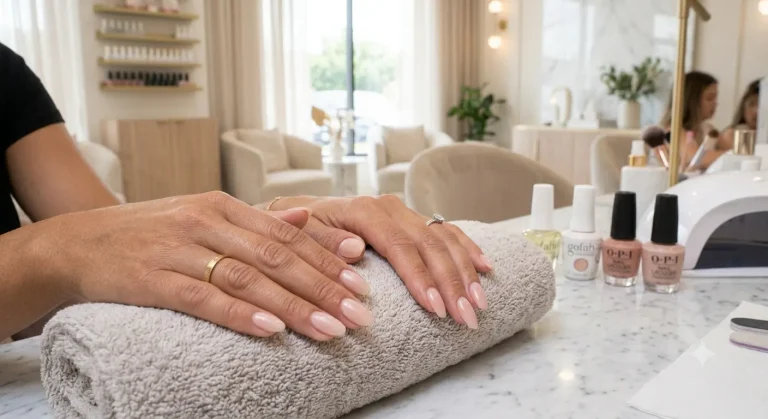
No matter which nail enhancement system you choose, regular maintenance is essential for keeping your nails looking beautiful and preventing lifting, breakage, or unnecessary stress on the natural nail.
As your natural nails grow, the enhancement gradually moves away from the cuticle. This changes the balance of the nail and can reduce its structural support if left unattended.
BIAB Maintenance
Most BIAB clients return every 2 to 4 weeks, depending on how quickly their natural nails grow and how much daily wear they experience.
During a maintenance appointment, your nail technician will:
- Assess the condition of the existing BIAB overlay.
- Remove any lifting or damaged product.
- Rebalance the nail structure.
- Apply fresh BIAB where needed.
- Finish with your chosen color or top coat.
Because BIAB is commonly worn on natural nails, appointments are usually quicker than full extension services.
Hard Gel Maintenance
Hard Gel enhancements also require regular fills, typically every 3 to 4 weeks.
During a refill appointment, your technician will:
- File and rebalance the existing Hard Gel.
- Repair any cracks or chips.
- Rebuild the apex if necessary.
- Fill the growth area with fresh gel.
- Reshape and refine the nails before applying color or nail art.
Since Hard Gel is often used for longer extensions, maintenance appointments may take slightly longer to ensure the nails remain structurally balanced.
Why Maintenance Matters
Skipping maintenance appointments can lead to several issues, including:
- Lifting
- Cracks
- Increased pressure on the natural nail
- Higher risk of accidental breakage
- More extensive repairs during your next visit
Keeping a consistent refill schedule not only preserves the appearance of your manicure but also helps protect your natural nails over time.
BIAB vs Hard Gel: Removal Process
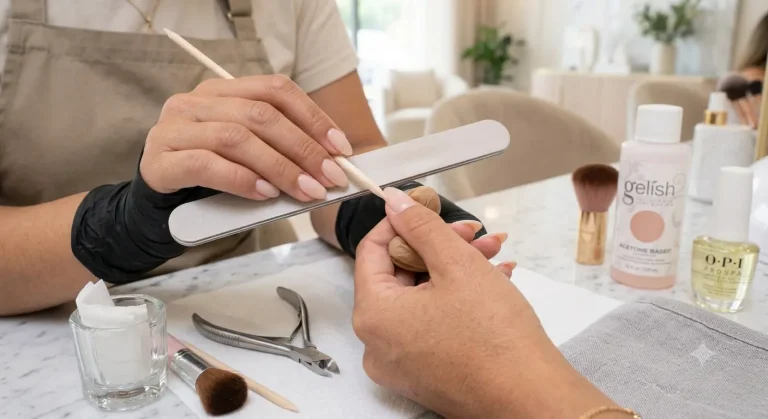
Removing BIAB
Depending on the specific BIAB product used, removal may involve soaking or careful filing.
Many professional nail technicians prefer to leave a thin layer of healthy product on the nail before reapplying a fresh overlay. This minimizes unnecessary filing on the natural nail and helps maintain nail integrity.
Attempting to peel or forcefully remove BIAB at home can damage the nail plate and increase the risk of thinning or peeling.
Removing Hard Gel
Hard Gel is significantly more rigid than BIAB and is not designed to soak off with acetone.
Instead, it is carefully reduced using professional filing techniques until only a thin protective layer remains or the product is completely removed, depending on the service being performed.
Because of its hardness, removal should always be performed by a trained technician to minimize the risk of damaging the natural nail.
Professional Removal Is Always Recommended
Whether you wear BIAB or Hard Gel, proper removal is just as important as proper application.
Professional removal helps:
- Preserve natural nail health.
- Reduce unnecessary filing.
- Prevent nail plate damage.
- Prepare the nails for future enhancements.
BIAB vs Hard Gel: Cost Considerations
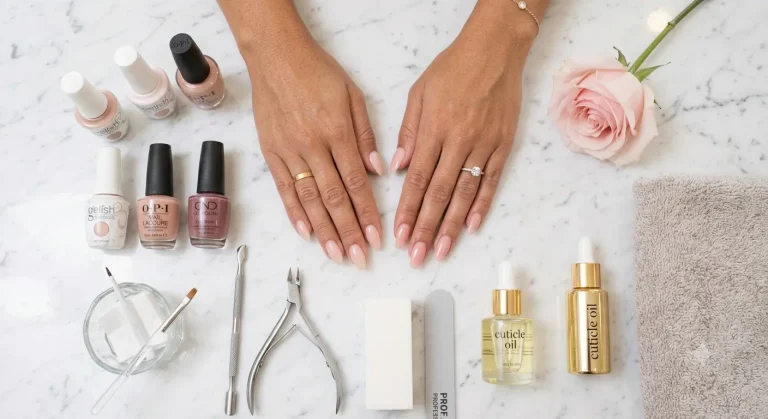
When comparing BIAB and Hard Gel, it’s natural to wonder which option offers better value.
The answer isn’t simply about the initial appointment price. It’s about choosing the enhancement that best matches your lifestyle and maintenance routine.
Several factors influence the overall cost of a nail service, including:
- Nail length
- Design complexity
- Nail art
- Refill frequency
- Time required for application
- Product used
For example, a simple BIAB overlay on natural nails may require less time than a full set of sculpted Hard Gel extensions with intricate nail art.
However, because Hard Gel is designed for longer enhancements, many clients consider the additional investment worthwhile if it aligns with their preferred style.
Rather than focusing solely on price, consider the value you’ll receive in terms of durability, appearance, and how well the enhancement supports your daily routine.
At V Nails, we’ll recommend the most suitable service based on your nail goals instead of encouraging unnecessary upgrades.
BIAB vs Hard Gel: Which Is Better for Nail Health?
One of the biggest misconceptions in the beauty industry is that one enhancement system is automatically “healthier” than another.
In reality, healthy nails depend far more on proper application, routine maintenance, and professional removal than on the product itself.
Both BIAB and Hard Gel can be safely worn when applied correctly by trained technicians.
BIAB and Natural Nail Growth
BIAB has earned a strong reputation among clients who want to strengthen their natural nails.
Because it is typically used as an overlay, it provides additional support while allowing the natural nail underneath to grow with less breakage.
Many clients transitioning away from weak, peeling, or brittle nails choose BIAB because it encourages consistent nail growth through added protection.
Hard Gel and Nail Protection
Hard Gel also protects the natural nail by creating a durable barrier against everyday impacts.
Its rigid structure makes it especially useful for clients who regularly wear long extensions, reducing the likelihood of snapping an extension during daily activities.
Healthy Habits Matter Most
Regardless of which enhancement you choose, healthy nails depend on good habits such as:
- Scheduling regular maintenance appointments.
- Avoiding picking or peeling product.
- Wearing gloves during household cleaning.
- Using cuticle oil regularly to keep the surrounding skin hydrated.
- Having enhancements removed professionally.
Following these practices helps maintain both the appearance of your manicure and the condition of your natural nails over time.
Pros and Cons of BIAB
Advantages
- Strengthens natural nails.
- Lightweight and comfortable.
- Flexible enough for everyday wear.
- Encourages healthy nail growth.
- Creates a natural-looking finish.
- Ideal for short to medium-length nails.
Considerations
- Not intended for very long extensions.
- May not suit clients who prefer dramatic nail shapes.
- Requires regular maintenance as natural nails grow.
Pros and Cons of Hard Gel
Advantages
- Extremely durable.
- Ideal for sculpted extensions.
- Excellent for intricate nail art.
- Maintains long nail shapes effectively.
- Highly resistant to everyday wear.
Considerations
- Professional removal is required.
- Less flexible than BIAB.
- Longer appointments may be needed for extensions and maintenance.
Still unsure which service is right for you? Browse our Nail Enhancement Services or contact the V Nails team for personalized recommendations based on your lifestyle, nail condition, and beauty goals.
Who Should Choose BIAB?

BIAB is an excellent choice for clients who want to enhance their natural nails without adding excessive length. Its flexible structure and lightweight feel make it one of the most comfortable enhancement systems for everyday wear.
You may be an ideal candidate for BIAB if you:
- Want to grow your natural nails longer without frequent breakage.
- Prefer a clean, natural-looking manicure.
- Work in a professional environment where understated nails are preferred.
- Enjoy short to medium-length nails.
- Have weak, brittle, or peeling nails that need additional support.
- Like changing nail colors regularly while keeping a strong base underneath.
Many first-time nail enhancement clients also begin with BIAB because it allows them to experience added strength while maintaining the look and feel of their natural nails.
If your goal is healthier-looking nails with a polished appearance, BIAB is often the ideal starting point.
Who Should Choose Hard Gel?
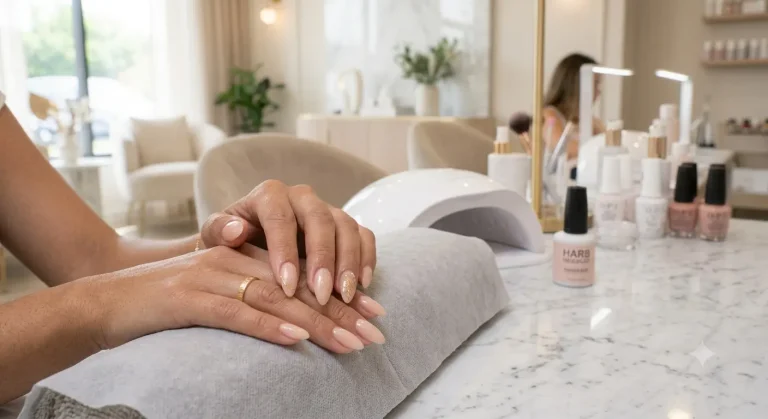
Hard Gel is best suited for clients who want maximum durability and the freedom to wear longer nail enhancements.
You may prefer Hard Gel if you:
- Love long nail extensions.
- Frequently wear almond, coffin, ballerina, or stiletto nail shapes.
- Want a durable foundation for detailed nail art.
- Need additional structural support because of your preferred nail length.
- Don’t mind scheduling routine refill appointments with your technician.
Clients who enjoy glamorous manicures for weddings, special events, vacations, or simply as part of their personal style often appreciate the stability that Hard Gel provides.
With proper maintenance, Hard Gel allows for elegant, long-lasting enhancements while maintaining excellent structural integrity.
BIAB vs Hard Gel: Final Verdict
So, which one should you choose?
The answer depends entirely on your nail goals.
Choose BIAB if your priority is strengthening your natural nails, encouraging healthy growth, and achieving a clean, natural appearance. It offers flexibility, comfort, and excellent protection for short to medium-length nails, making it a great option for everyday wear.
Choose Hard Gel if you want long, sculpted nail extensions that can withstand daily wear while maintaining their shape. Its superior rigidity makes it the better choice for dramatic lengths, intricate nail art, and clients who prefer statement manicures.
Rather than thinking of BIAB and Hard Gel as competitors, it’s more accurate to view them as two professional systems designed for different needs.
A consultation with an experienced nail technician can help determine which enhancement best suits your natural nails, daily routine, and personal style.
At V Nails, we take the time to understand your goals before recommending a service. Whether you’re looking for healthier natural nails or stunning extensions, we’ll help you choose the option that delivers the best long-term results.
Conclusion
Both BIAB and Hard Gel have transformed the way modern nail enhancements are performed. Each system offers unique benefits, and neither is universally better than the other.
If you value flexibility, natural beauty, and strengthening your own nails, BIAB is an excellent investment.
If you dream of long, elegant extensions with exceptional durability, Hard Gel may be the better fit.
The most important factor isn’t choosing the “strongest” product. It’s selecting the enhancement that complements your lifestyle while protecting the health of your natural nails.
At V Nails, our experienced technicians are committed to helping every client find the perfect solution based on their individual needs. From your initial consultation to every refill appointment, we focus on beautiful results, healthy nails, and exceptional service.
Continue Your Nail Journey
Looking for more nail care tips and inspiration?
- Homepage: https://vnailsbutuan.ph/
- Contact Us: https://vnailsbutuan.ph/contact/
Ready for beautiful, long-lasting nails? Book your appointment with V Nails today and let our team recommend the enhancement that’s perfect for you.
Frequently Asked Questions About BIAB vs Hard Gel Services
Is BIAB better than Hard Gel?
Neither is objectively better. BIAB is ideal for strengthening natural nails and creating a lightweight, natural appearance, while Hard Gel is designed for stronger, longer nail extensions.
Can BIAB be used for nail extensions?
Yes. BIAB can support short extensions, but it is generally intended as an overlay for natural nails rather than long sculpted enhancements.
Does Hard Gel damage natural nails?
Hard Gel itself does not damage nails when it is applied, maintained, and removed correctly. Improper removal, such as peeling or excessive filing, is what commonly causes nail damage.
Which lasts longer?
Both systems can last several weeks with proper care. Hard Gel generally performs better on long extensions because of its rigid structure, while BIAB performs exceptionally well on natural nails.
Which looks more natural?
BIAB is often preferred for clients seeking the most natural-looking manicure because it closely follows the contour of the natural nail and has a lightweight finish.
Can I switch from Hard Gel to BIAB?
Yes. Many clients transition from Hard Gel to BIAB after professionally removing or reducing their existing enhancements. Your technician can recommend the safest transition process.
Is BIAB suitable for weak nails?
Yes. BIAB is commonly chosen by clients with weak, brittle, or peeling nails because it provides additional support while allowing natural nail growth.
Can I apply regular nail polish over BIAB or Hard Gel?
Yes. Both BIAB and Hard Gel can be finished with gel polish or traditional nail polish, depending on your preferences.
How often should I schedule maintenance?
Most clients return every 2 to 4 weeks, depending on nail growth, lifestyle, and the type of enhancement being worn.
Which option should first-time clients choose?
Many first-time clients begin with BIAB if they want stronger natural nails. Those who specifically want long extensions may be better suited to Hard Gel. A consultation with a professional nail technician is the best way to determine the right service.